Instagram Lead Ads: How They Work, and When a Funnel Gets You Better Leads (2026)
How Instagram lead ads and Meta instant forms work, what they can and can't ask, where the leads go, and how to decide between an instant form and sending the click to a mobile funnel. Every Meta figure checked at the source.
 Faheem MushtaqCo-Founder & CTO
Summarize this article with
 ChatGPT
 Claude
 Perplexity
 Grok
Instagram lead ads are Meta ads that open a form inside Instagram, so a person can send you their contact details without leaving the app. The form is called an instant form, you build it in Meta Ads Manager under the Leads objective, and the same lead ad can run on both Facebook and Instagram. Name, email and phone number are often prefilled from the person's Meta account, which is why submitting one can take a single tap.
That single tap is the product's biggest strength and its most common complaint: a form that costs nothing to submit collects people who have barely decided anything. This guide covers how instant forms work, and when the click should go to a funnel you control instead.
Every Meta figure below was checked against Meta's own Business Help Center, Meta for Business and Meta for Developers pages on 3 November 2026.
Key takeaways
- An Instagram lead ad is a Meta lead ad with an instant form, created in Ads Manager under the Leads objective and prefilled with details the person has already given Meta.
- There are two main form types. "More volume" is built to be submitted quickly on a phone; "Higher intent" adds a review step where the person confirms their details.
- Instant forms can qualify, within limits. Meta allows up to 15 questions in total, including multiple choice, short answer and conditional questions.
- Leads expire. Meta lets you download a lead for 90 days after it's submitted, so a CRM connection isn't optional.
- Meta's own data favours running both. Meta reports that campaigns using instant forms and website forms together averaged a 60% lower cost per lead than website-form campaigns alone.
- Send the click to a funnel when you need to qualify before the calendar, score answers, show a personal result, take a payment, or keep full step-by-step data.
What are Instagram lead ads?
An Instagram lead ad is an ad that collects contact information through a form that opens inside Instagram, instead of sending the person to a website. Meta describes instant forms as a way to collect contact information "without requiring those people to leave Facebook or Instagram."
There isn't a separate Instagram product for this. You create a lead ad and an instant form in Meta Ads Manager, and Meta's help page for Instagram lead ads says you can run that same ad across both Facebook and Instagram. Meta's help center also states that instant forms can only be used in a lead ad when the campaign uses the Leads (lead generation) objective.
How do Instagram lead ads work?
An Instagram lead ad works in three parts: the ad, the instant form it opens, and the place the lead goes once it's submitted.
1. The ad. You create a Leads campaign with "Instant forms" as the conversion location. Meta's lead ads page lists Instagram Feed and Instagram Stories as Instagram placements for instant form lead ads. Meta's placement documentation notes that ads only appear in Instagram Explore if they also run in Instagram Feed.
2. The instant form. The form can include an intro screen, prefilled contact fields, custom questions, a privacy policy and a completion screen. Meta's help center says contact information such as name, email address and phone number "may be prefilled" if the person has already provided it to Facebook, and that people can edit their prefilled answers before submitting.
3. The lead. Submitted leads are stored by Meta. You can download them as a CSV from Ads Manager or Meta Business Suite, retrieve them through the API, or send them to a connected CRM. Meta's help center is explicit that you have 90 days from the time a lead submits the form to download it, after which the lead expires.
What can an instant form ask?
An instant form can ask a person for contact details and up to 15 questions in total, according to Meta's Business Help Center. The custom question types Meta lists are:
Two details matter for Instagram specifically. Meta's "Availability of Lead Ads Features Across Platforms and Devices" table lists the store locator and appointment request questions for Android and iOS, but doesn't mark either as available on Instagram — check Ads Manager before you plan an Instagram booking campaign around them. And Meta's help center notes that a published instant form can't be edited. To change one, you duplicate it, edit the copy and republish.
More volume vs. higher intent: which form type should you use?
Use "More volume" when the priority is the number of leads and your team can qualify them afterwards with a lead qualification process. Use "Higher intent" when every lead will get a call and you'd rather have fewer people who meant to submit.
Meta's help center describes "More volume" as a form that is "quick to fill out and submit on a mobile device." It describes "Higher intent" as adding "a review step that gives people a chance to confirm their information." Meta's feature availability table lists the higher intent form for Android, iOS and Instagram, but not desktop.
The review step adds one deliberate screen between the tap and the submit, which filters out some accidental submissions. It doesn't ask anything new, so it can't tell you whether a lead has the budget or timeline you need.
Why do Instagram lead ads get low-quality leads?
Instagram lead ads get low-quality leads mostly because they are easy to submit. When the contact fields are already filled in, the cost of sending a form is close to zero, so the form collects people who were curious for a second as well as people who want to buy.
Three mechanics make it worse:
- Prefill removes the effort that signals intent. A person who types their phone number has decided something. A person who taps "Submit" on a number Meta filled in may not have.
- Meta optimises for what you tell it to count. If the campaign's goal is the number of leads, the delivery system finds people who submit forms. It has no way of knowing which of them your sales team closed unless you tell it.
The fix Meta offers for that last point is the conversion leads performance goal. You connect your CRM through the Conversions API, send back which leads became qualified or became customers, and Meta optimises delivery toward people who look like them. Meta's Advantage+ leads page reports that ads using this setup saw, on average, a 15% lower cost per quality lead and a 44% increase in the rate of converting a lead into a quality lead, compared with ads using the standard leads performance goal. Those are Meta's own averages, not an independent study.
There are conditions. Meta's developer documentation says the conversion leads goal is currently only compatible with lead ads using instant forms, and recommends at least 200 leads a month, a lead-to-conversion rate between 1% and 40%, and CRM events sent back for at least 60% of leads. And however good the leads are, they cool quickly — our speed-to-lead statistics page covers what the research shows about response time.
Instagram lead ads vs. a landing page or funnel: which is better?
Neither is better in general. An instant form is better when you want volume and will qualify by phone. A funnel on your own domain is better when you need to qualify, personalise or sell before a human gets involved.
Meta itself doesn't frame it as either/or. Its "Generate leads with online forms" page reports that campaigns running both instant form and website form campaigns saw, on average, a 60% lower cost per lead and a 125% increase in lead volume compared with website form campaigns alone. Again, that's Meta's own figure. If you do send people to your site, what you ask and in what order decides how many finish; our guide to building a lead form for mobile ad traffic covers the fields and the sequence.
The right-hand column costs a page load: an instant form is already inside the app, while a funnel has to load in Instagram's browser. That makes the funnel's weight matter. For reference, our published recruitment template ships a 102 KB HTML document and loaded in a median 0.50 seconds when we measured it on 13 September 2026; our appointment booking template, which carries more imagery, ships 484 KB and took 1.05 seconds.
When should you send Instagram traffic to a funnel instead?
Send the click to a funnel when a lead isn't worth calling until you know more, or when the next step has to happen without a salesperson:
- You need to qualify before the calendar. A clinic, a coach or a B2B service doesn't want a booked slot from someone outside its budget. A booking funnel asks two or three qualifying questions and only shows the calendar to people who pass.
- The answers should change what happens next. Instant forms can vary an answer list, but they can't send a person down a different path. A funnel can skip, branch and route on any answer.
- You're scoring leads. If budget, timeline and fit each carry points and only high scores get a call, you need scoring, which instant forms don't have. Our quiz funnel guide walks through how points and routing work.
- The offer is a personal result — a plan, a quote range or an eligibility check — or ends in a payment. An instant form can deliver neither. A loan officer's "see what you could afford" offer is a typical case, covered step by step in our guide to mortgage lead generation on Facebook and Instagram.
- You run campaigns for clients. An agency needs each client's leads kept in their own workspace, kept longer than 90 days, and reportable by step, not just by submission.
Stay with an instant form when the offer is simple, the volume matters, your sales team calls every lead within minutes, and you can connect a CRM so Meta learns which leads were real.
A worked example: the same campaign, built both ways
Take a teeth-whitening clinic running Instagram Stories ads for a free consultation.
As an instant form: an intro screen, prefilled name, email and phone, and two multiple-choice questions — treatment and start date. It takes seconds. Every submission lands in one list, and the front desk calls all of them to find out who's serious.
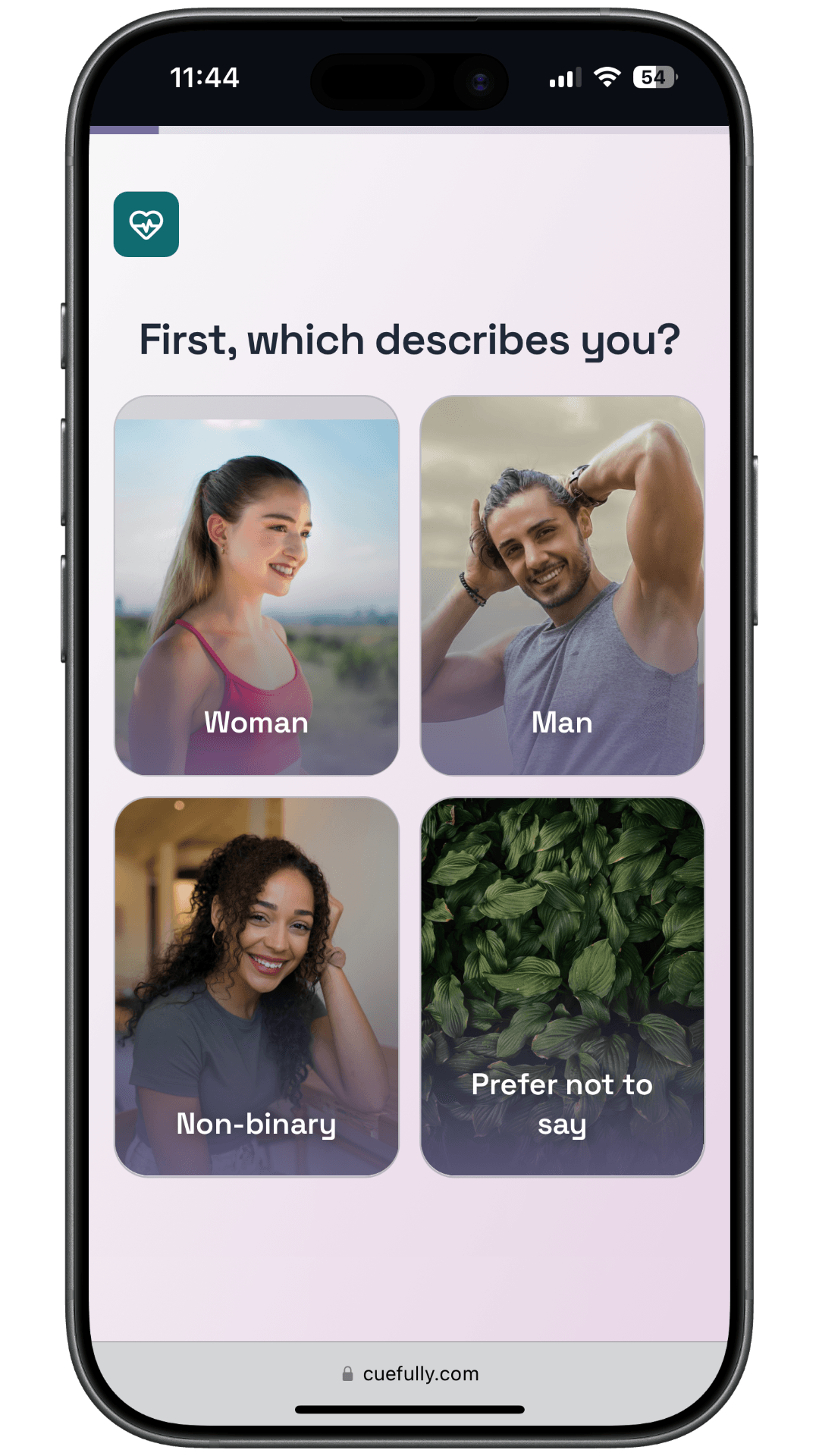
As a funnel: the ad opens a first screen with one question answered by tapping an image — "What would you like to change about your smile?" Then two taps on timeline and budget range, each on its own screen. People who choose "just browsing" are shown a guide and asked for an email. People inside the clinic's range see a calendar and book directly. Phone and email are asked once, on the last screen, when there's something to confirm.
The instant form will almost certainly produce more leads, because it asks for less; the funnel produces fewer, already sorted. The only way to know which wins is to run both against the same audience and compare what each produced after the call. Our cost per lead by industry page explains why cost per lead alone is the wrong number to judge that on.
How to track a funnel when the click leaves Instagram
If you send Instagram traffic to a funnel, Meta loses the in-app submission signal it gets from instant forms, so you have to give it back yourself. Meta's guidance for website lead campaigns is the Leads objective, a Website conversion location, and the "maximize number of conversions" performance goal, used with the Conversions API for web.
In practice that means three things:
- Fire the Meta Pixel in the browser when someone reaches a meaningful step and when they submit.
- Send the same events server-side through the Conversions API, so they still count when browser tracking is blocked. Our Meta Conversions API guide covers deduplication and which events to send.
- Send a separate event for qualified leads, not just all leads, so you can optimise toward the people your funnel scored highly rather than everyone who submitted.
Without that last step, Meta optimises a funnel for the cheapest submission, exactly as it does an instant form.
What to build the funnel with
CueFully is a mobile-first funnel builder designed specifically for Instagram, TikTok and Meta ad campaigns. Funnels are thumb-first, ask one question per screen, and are answered by tapping. Branching logic and answer scoring decide who sees the calendar, the offer or the nurture path. Meta Pixel and the Conversions API are set up as one integration, leads land in a built-in CRM, and per-step drop-off analytics show exactly which question is losing people. Agencies get an isolated workspace per client, each with its own funnels, leads and brand kit, and leads can also go to Slack, Google Sheets or a webhook.
You can take the appointment booking template on your phone to see what the funnel side of the table above looks like before you build anything.
Frequently asked questions
Are Instagram lead ads the same as Facebook lead ads? Yes, in practice. Both use a Meta instant form created in Meta Ads Manager under the Leads objective, and Meta's help center says the same lead ad can run across Facebook and Instagram. The difference is only where the ad is shown.
How do I get my leads from Instagram lead ads? Download them as a CSV from Meta Ads Manager or Meta Business Suite, retrieve them through Meta's API, or connect a CRM. Meta allows you to download a lead for 90 days after it's submitted, so connect a CRM or export regularly.
Can Instagram lead ads qualify leads? Partly. An instant form can hold up to 15 questions, including multiple choice, short answer and conditional questions, and the "Higher intent" form type adds a review step. Instant forms can't score answers or send people down different paths, which is where a funnel takes over.
Why are my Instagram lead ad leads low quality? Usually because the form is prefilled and takes one tap to submit, and the campaign is optimised for lead count rather than quality. The "Higher intent" form type, a qualifying question, and Meta's conversion leads goal with a connected CRM all help.
Should I use an instant form or a landing page for Instagram ads? Use an instant form for simple offers where your team calls every lead quickly. Use a mobile funnel when you need to qualify before booking, personalise a result, score answers or take a payment. Meta reports that running both together averaged a 60% lower cost per lead than website forms alone, so testing both is a reasonable default.
Sources and method
All Meta pages were checked on 3 November 2026. Meta's own reported averages are labelled as such in the text; none of them is an independent study.
- Meta Business Help Center — "About lead ads with instant form" — instant forms collect contact information without leaving Facebook or Instagram; instant forms require the Leads objective; prefilled contact fields are editable; 90-day download window.
- Meta Business Help Center — "About lead ads on Facebook and Instagram" — Instagram Feed and Instagram Stories as instant form placements.
- Meta Business Help Center — "Set up ads in Instagram Explore" — Explore delivery requires Instagram Feed.
- Meta Business Help Center — "Create a lead ad for Instagram" — the same lead ad and instant form can run across Facebook and Instagram.
- Meta Business Help Center — "Add custom questions to your Instant Form" and "Add conditional answers to your Instant Form" — question types, 15-question limit, conditional answer behaviour.
- Meta Business Help Center — "Availability of Lead Ads Features Across Platforms and Devices" — higher intent, store locator and appointment request availability by platform.
- Meta Business Help Center — "Create a lead ad from Business Suite" — "More volume" and "Higher intent" form type descriptions.
- Meta Business Help Center — "Download or retrieve your leads data" — export options and the 90-day limit.
- Meta for Business — "Generate leads with online forms" — combined instant form and website form campaigns: 60% lower cost per lead, 125% more lead volume (Meta-reported average); website lead campaign setup with the Conversions API.
- Meta for Business — "Meta Advantage+ leads campaigns" — conversion leads with CRM: 15% lower cost per quality lead, 44% higher lead-to-quality-lead rate (Meta-reported average).
- Meta for Developers — "Conversions API for CRM integration" — conversion leads compatibility with instant forms only; 200 leads per month, 1–40% conversion rate and 60% lead coverage recommendations.
- CueFully recruitment and appointment booking templates — HTML document size and median load time, measured 13 September 2026.
Running Instagram ads to a form that sends every lead to the same list? See what a mobile funnel looks like — then start free with CueFully.
Build from the guide
Start with the Metabolism Quiz template
Start from a complete mobile-first flow, customize it for your client, and publish a funnel that captures qualified leads without adding developer work.